
How Can Dental Implants Help Prevent Bone Loss in the Jaw?
How Can Dental Implants Help Prevent Bone Loss in the Jaw?
Losing a tooth is about more than just a gap in your smile. Underneath the gum line, your jawbone relies on the pressure and stimulation of tooth roots to stay strong and dense. When a tooth goes missing and isn’t replaced, that stimulation disappears, and the bone in that area slowly begins to shrink. Over time, this bone loss can change the shape of your face, affect nearby teeth, and make future tooth replacement more complicated.
At Aesthetic Family Dentistry of Bel Air, we see patients every week who didn’t realize how quickly jawbone loss can start after losing a tooth. The good news is that it’s preventable. Dental implants are one of the few tooth-replacement options that actually protect the bone underneath, rather than simply covering up the gap.
Why Does the Jaw Lose Bone After Tooth Loss?
Your jawbone is living tissue. Just like muscles need exercise to stay strong, bones need consistent pressure to maintain their density. Every time you bite and chew, your tooth roots transmit that pressure down into the jawbone, signaling your body to keep rebuilding and reinforcing the bone in that area.
When a tooth is extracted or lost, and nothing replaces the root, that stimulation stops. The body starts to resorb, or reabsorb, the bone that’s no longer being “used.” Studies show that patients can lose a significant percentage of jawbone width within the first year alone, and the loss continues gradually after that. This is why an area with a missing tooth often looks sunken or thinner over time, even if it wasn’t noticeable right away.
How Traditional Tooth Replacement Falls Short
Dental bridges and removable dentures can restore your smile’s appearance and help you chew again, but neither one replaces the tooth root. A bridge rests on the neighboring teeth, and a denture sits on top of the gums. Neither transmits chewing pressure down into the jawbone the way a natural tooth root does. That means bone loss can continue beneath a bridge or denture even after treatment, sometimes leading to a looser fit or a change in facial appearance down the road.
How Do Dental Implants Protect the Jawbone?
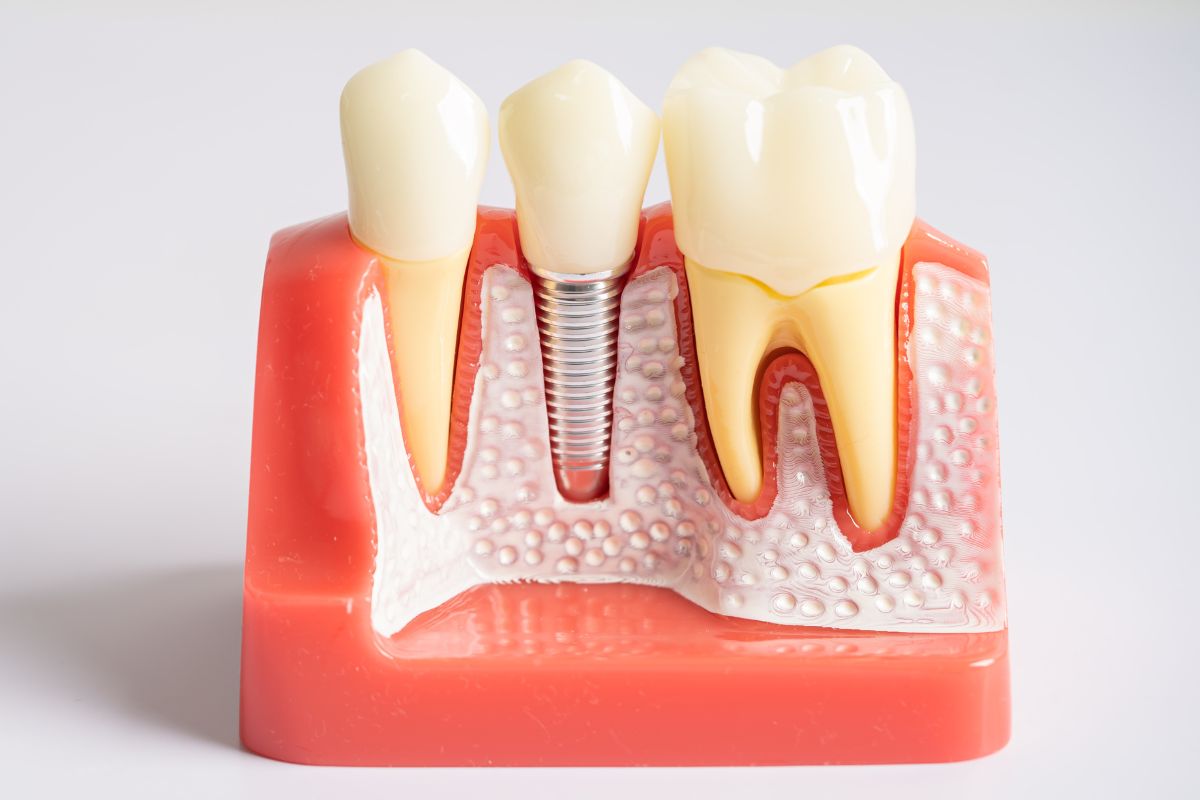
This is where dental implants make a real difference. A dental implant is a small titanium or zirconia post that’s placed directly into the jawbone, acting as an artificial tooth root. Once it fuses with the bone through a process called osseointegration, it restores the same kind of pressure and stimulation a natural tooth root provided.
Because the implant is anchored in the bone itself, chewing forces are transmitted the way nature intended, encouraging the jawbone to stay dense and healthy instead of shrinking. This is one of the main reasons dentists consider implants the gold standard for long-term tooth replacement, especially for patients who want to protect their facial structure and oral health for years to come.
Beyond bone preservation, dental implants also tend to:
- Feel and function like natural teeth when eating and speaking
- Help keep neighboring teeth stable and properly aligned
- Support a more youthful facial appearance by maintaining jaw structure
- Last for decades with proper care, often outlasting bridges or dentures
What to Expect From the Dental Implant Procedure?
Many patients ask us what the dental implant procedure actually involves before committing to treatment. In general, it happens in a few stages: first, a thorough exam and imaging to evaluate your jawbone and plan implant placement; next, the implant post is placed into the bone and given time to heal and fuse; and finally, a custom-made crown is attached on top, completing your restoration. Depending on your bone health and the number of teeth being replaced, the full process can take a few months, but each stage is planned around your comfort and long-term results.
For patients who have already experienced some bone loss, a bone graft may be recommended first to build up enough density to support an implant. Our team evaluates this on a case-by-case basis so you get a plan tailored to your mouth, not a one-size-fits-all approach.
Don’t Wait on a Missing Tooth
The longer a missing tooth goes unreplaced, the more jawbone density you stand to lose and the more that loss can affect your bite, facial shape, and future treatment options. Understanding how dental implants help preserve the jawbone is the first step toward making an informed decision about your oral health.
If you’re considering replacing a missing tooth, visit our dental office to learn about your treatment options. Our team can evaluate your smile, answer your questions, and help you determine whether dental implants are the right solution for restoring your oral health and confidence.


